Showing posts with label writing samples. Show all posts

Thursday, March 10, 2011

horror vacui— a fond look

"Mrs Leoni's Parlor" 1894— part of a series of NYC interiors by Byron
Ophelia by John Everett Millais, 1852-53
A reblog with updating

I've been thinking about Victorian painting— specifically about the pre Raphaelites and their hallucinatory hyper-realism (its difficult to use "realism" in conjunction with these paintings of knights errant and damsels). The shrill colors and the complexity of the details are fascinating to me at the moment. Something in my head is percolating about the artist Meghan Boody and the updated pre Raphaelite vision —but who knows if I'll be able to say any more than just that.

A 20th century art historian remarked on the pre-Raphaelite tendency toward "blade-by-blade" painting-- that is rendering each and every line and form in equal detail. Filling the entire canvas with detail, filling a page with 9 different typefaces and varieties of ornament, filling an entire room with dainties, what-nots, and doodads— a Victorian inclination and equal illustration of horror vacui.
Horror vacui - "fear of emptiness" or empty space is a term I love. The phrase carries with it intimations of mania and compulsion —covering every surface, interweaving pattern atop pattern. Perhaps it can be as loosely interpreted as Collyer Brothers piles or the noisy and noisome claustrophobic streets of Dickensian London. Somehow, though, I relate the term to an overall sensibility. A complex density with an awareness of the whole, not an open-ended haphazardness. But I'm not sure if this is really the case.

I came upon these rather amazing photographs
taken by Philip Henry Delamotte (above), in about 1859, of the later incarnation of London's Crystal Palace Exhibition of 1851. (After the exhibition closed it was moved to Sydenham Park and rebuilt, which is what is shown here. It remained standing until it burned, November 30th 1936.) The Crystal Palace exhibit was a kind of World's Fair, an enormous display of technological and cultural achievements. Though international in scope, it was sort of Britain on parade. ( I believe it was in the 1850s that the term "Victorian" solidified into a cultural identity.) The exhibition opened the floodgates for all manner of manufactured ornament, embellishment and gewgaws.

About this same time, Richard Dadd, locked away in a London hospital for the criminally insane, began the first dabs of Fairy Feller's Master Stroke, below left, and then continued for nine years.
For the rest of the 19th century (and into the 20th) great moral debates raged over "taste" and the "proper use" of ornament. And in the midst of that, many people's houses ended up looking like this "Parlor, 11 West 45th Street, New York, 1896" (taken from the wonderful The Tasteful Interlude: American Interiors through the Camera's Eye, 1860-1917 by William Seale). Called a Japanese Parlor, the nook features a "Moroccan" inlaid table, Turkish- inspired seating and cushions, most likely a Persian carpet, and no less than four window treatments.
J.K. Huysmans' Au Rebours ("Against Nature"), published in 1884, is practically a recitation of the senses; a literary horror vacui in which words stand in for the over-stimulated eye sweeping across every surface:
"In other days, when he was still in the habit of inviting women to his house, he had fitted up a boudoir where, amid dainty carved furniture of the light-yellow camphor-wood of Japan, under a sort of tent of pink Indian satin, the flesh tints borrowed a soft, warm glow from the artfully disposed lights sifting down through the rich material. This room, where mirrors hung on every wall, reflecting backwards and forwards from one to another an infinite succession of pink boudoirs, had enjoyed a great renown among his various mistresses, who loved to bathe their nakedness in this flood of warm crimson amid the aromatic odours given off by the Oriental wood of the furniture.../ The dining-room, draped in black, opened out on to a garden metamorphosed for the occasion, the paths being strewn with charcoal, the ornamental pond edged with black basalt and filled with ink, and the shrubberies replanted with cypresses and pine. The dinner itself was served on a black cloth adorned with baskets of violets and scabious; candelabra shed an eerie green light over the tables and tapers flickered in the chandeliers. While a hidden orchestra played funeral marches, the guests were waited on by naked negresses wearing only slippers and stockings in cloth of silver embroidered with tears..."
While not a literal transcription of synesthesia, it renders the effect.

Tuesday, February 8, 2011

Cheap thrills

Gold hat ornament set with six foiled rose-cut amethysts and seven diamonds.
The reverse is enameled in black and white.
Pendant cross, gold, set with foiled and trap-cut spinels bordered by table-cut diamonds and cabochon emeralds
Gold hairpin set with turquoise
Pendants, hair ornaments, etc. as modelled by Elizabeth I
The Cheapside Hoard contains over thirty necklaces of various lengths.  
The hoard was particularly fascinating because typically objects of gold and gemstones were sent by their owners to be reworked periodically, even when not damaged by wear. As a result, extremely few pieces of common, non-royal jewelry survived in the original state into the 19th and 20th centuries.
Two flower shaped rings in the Spanish fashion, one with seven cabochon emeralds, the other enameled and set with garnets. Two gold rings set with sapphire. Center, gold ring set with a large table-cut diamond in a white champlevé enameled gold setting.
Gold pendant or hat ornament, with foiled flat and fancy-cut amethysts,
enameled on reverse.
Gold pendant in the form of a bow set with fancy-cut and trap-cut foil-backed rubies and table-cut diamonds. Called a 'flower' in Elizabethan times, it was often attached by a ribbon to the left breast.
Below it, a hat ornament in the form of a salamander with cabochon emeralds and diamonds,
many of which are missing. The tongue is also missing.
These images are just a few items from a cache of approximately 500 pieces of jewelry and loose gems at the Museum of London known, rather inelegantly, as the Cheapside Hoard. “Cheapside", both a street and a district in London, originates from the word "chepe" (or "cepe," or "cheop") meaning 'barter' or 'market.' Beginning in the 11th century, the area was known for its food market as well as for shops of various trades. Goldsmith's Row (near Poultry street, Iron Lane, etc) ran between Bread Street and Friday Street and was the center of the gold and gem trade.

Long after the jewelers left and the area changed, on June 18, 1912, workmen started demolition at 30-32 Cheapside, a derelict tenement 300 years old or more. Workers got down to the cellar and when they broke through the floor they unearthed what has been called the finest collection of Elizabethan and Jacobean jewelry in the world. They'd found the house stock of a jeweler, buried under the floorboards since the early 1600s.


Evidently it was common, until 1970 or so, that laborers would come across all sorts of archaeological finds across the city—which they would then bring to a certain dealer
to make a few easy pounds. Journalist Henry Vollam Morton described the tradition in the 1920s:
"I cannot count the times I have been present when navvies have appeared and passed their treasures across the counter with a husky, “Any good to yer, guv’nor?” I have seen handkerchiefs unknotted to reveal Roman pins, mirrors, coins, leather, pottery and every kind of object that can lie concealed in old and storied soil. I was with him one day when two navvies handed over a heavy mass of clay found beneath a building in Cheapside. It was like an iron football, and they said there was a lot more of it. Sticking in the clay were bright gleams of gold. When they had gone, we went up to the bathroom and turned the water on to the clay. Out fell pearl earrings and pendants and all kinds of crumpled jewellery. That was how the famous hoard of Tudor jewellery, the Cheapside Hoard, was discovered."
The 'Vauxhall pastes' (faceted glass paste gems whose flat backs were mirrored)–
the cabochon, bezeled and table-cut garnets, emeralds, turquoise, diamonds, sapphires–
the 30 or more chains of delicate knots, scrolls and foliate links, tiny details picked out in colored enamel–
the gold rings and salamander hat ornaments–
sat buried in the cellar while the plague passed through and the Great Fire of 1666 raged (above),
while America was found, then lost,
and Victoria came and went...
And now you can see them.

Monday, January 3, 2011

Sexiest Men (no longer) Alive*

Baron von Richthofen, c 1917
80 direct hits. Need I say more?
Early aviator Harry Atwood, c 1910
Not exactly my type but flyboy's got something, too.
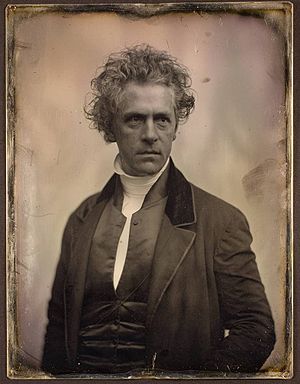
 Reverand Rollin Heber Neale, 1850
That is one nasty preacherman.
William Sydney Mount, 1853
A dastardly lout, a cad, a rogue. Tell me more.
Julius Caesar
Proving that "sexy is ageless" even at 2000+. Vici indeed.
Walter Sickert, about 1918
Walter Sickert is bad news in the best possible way.
Commander in armor, Anthony van Dyck, c. 1625
Long lush hair, beautiful features, armor. Taking command.
Vsevolod Garshin, Ilya Repin, 1884
Ok he seems like a mess but you know you'd want to help him edit his work, get him some new clothes and cook for him.
Adrien Brody would play him in the movie.
Theodore Gericault, Horace Vernet, 1822-23
He painted severed limbs, ship wrecks and the insane and he had tuberculosis. Quite a handful. Then again he looked like this.

Three Men and a Boy, le Nain brothers, 1647-8
Dark, sketchy, satiny long-haired fellows—lets have a beer and discuss.

Young Man at Prayer, Hans Memling, 1487
This young man and Michael Sweerts, below, are vying for Most Sensitive guy
self portrait?, Michael Sweerts, 1656

Portrait of a man against flames, Isaac Oliver, about 1600
The flames, the shirt down to there, the jewelry, this guy is almost too showy for his own good.
Were women throwing their farthingales and drawers at him?
first cousins, the future Tsar Nicholas and King George V
Sporting fellows if ever there were! double date!
Albert of Belgium, about 1917
Impeccably turned out for trench warfare; he can carry me to safety anytime.
Anton Chekhov, 1890s
Weasely, but then again...
a tailor, Giovanni Battista Moroni, 1565-70
Turbulence beneath the calm, no mere shopkeeper, he.
The heart of an artist strains beneath that finicky, micro-slashed doublet.

I see Jeremy Irons in the movie.

William Hogarth, Louis-François Roubiliac, c 1740
Hogarth is more of a runner-up but I do love this bust. 
He's got a laddish humor and pugilistic intensity that wouldnt be out of place in a Guy Ritchie film.
I'd been collecting them on and off, images of men that seem incredibly appealing to me despite the century or two (or several) that might separate us. It started with that photo of Chekhov. Something about the greatcoat and the reed slim cane and that cocky, short man sensibility...  You may remember the electrifying Reverend Neale and the darkly dangerous Mr. William Sydney Mount from my Sartorialist, 1850s Edition post.


This is merely a trifling survey and part of on-going research... A good Regency-era Romantic is a must and I am certainly forgetting some entrancing 18th century fellow so please do let me know who should be on this list. [A Gentlemen's Edition will surely follow in the near future, with a selection of feminine pulchritude of the ages.]

* [with apologies to People Magazine]
Where is William Powell you might ask? Or Kurt Cobain? or any number of too-recent, too-recognized, or too-well-publicized men who could surely otherwise be on a list of Sexiest Dead Men? Well, this is an inexact science so let me know what you think.


PS: Someone asked why I skipped Lord Byron. I have to report that his reputation always seemed more attractive to me than he did.

Friday, November 19, 2010

permanence and (im)perfection

From top: 15th century bowl with 18th century porcelain yobitsugi repair, mid-17th century stoneware cup with kintsugi, 19th century tea tea bowl with kintsugi, mid 15th century bowl with maki-e repair.
All from the Freer Gallery of Art, Smithsonian Institution
12th century Korean ewer with replaced spout. V&A museum


All images of western repaired objects below from Past Imperfect, a blog by Andrew Baseman


My favorite items from Past Imperfect are unequivocally the glassware with prosthetic bases

First: kintsugi, I'm rather taken with the concept. Kintsugi ("gold joinery") is a traditional Japanese method of repair for cracked and broken ceramic ware. Lacquer is used to reattach broken pieces, the resulting "veins" of adhesive are then coated with silver or gold powder. Yobitsugi and maki-e are related techniques, the first utilizing "alien" pieces of ceramic to fill in for missing fragments, the latter replaces loss with areas of solid, decorated lacquer.

From a beautiful almost overwhelmingly sensitive essay by Christy Bartlett in Flickwerk:The Aesthetics of Mended Japanese Ceramics interpreting the exquisitely subtle aspects of Japanese aesthetic philosophy:
Not only is there no attempt to hide the damage, but the repair is literally illuminated... a kind of physical expression of the spirit of mushin....Mushin is often literally translated as “no mind,” but carries connotations of fully existing within the moment, of non-attachment, of equanimity amid changing conditions. ...The vicissitudes of existence over time, to which all humans are susceptible, could not be clearer than in the breaks, the knocks, and the shattering to which ceramic ware too is subject. This poignancy or aesthetic of existence has been known in Japan as mono no aware, a compassionate sensitivity, or perhaps identification with, [things] outside oneself.
Quite a while ago I wrote briefly on the related Japanese sensibilities of wabi and sabi. The terms wabi-sabi taken together identify and connote appreciation of qualities such as impermanence, humility, asymmetry, and imperfection. (These underlying principles are diametrically opposed to their Western counterparts: values based in Classicism, perfection, rationality and the heroic.) I was dumbstruck when I first learned of these concepts. This dialectic or opposition appeared to explain one of my longstanding issues: a certain loneliness I'd felt growing up, in part because most everything I found aesthetically interesting, pleasing, or desirable seemed to be the farthest thing from what was all around me. (This was Queens in the 1970s and 80s. I carried with me a sense mild alienation most of the time.)

I have to clarify that it is the idea of kintsugi— mending as transformation, a sort of reified transience— rather than the physical ceramic objects themselves that truly seems beautiful to me.//

From the philosophically suffused, rarefied aesthetics of kintsugi to the stalwart thrift and ingenuity of necessity: Interior designer Andrew Baseman's blog, Past Imperfect, the art of inventive repair is a great find for anyone interested in the beauty of mended objects. Andrew's blog focusses on his collection of artfully repaired items, mostly 18th and 19th century western artifacts. Professing a longstanding appreciation of "make-dos"— folksy or crude homemade repairs— Baseman prefers the term “inventive repairs” for describing and appreciating the embellishments on the pieces. His collection is a parade of charming, quirky, even mystifying, everyday items from the past made even more so by the eclectic methods employed in mending physical mishaps. These objects lie somewhere outside but near the boundaries of "folk art." They seem to be animated with a spirit that pristine examples don't necessarily hold, a paradoxical demonstration of perseverance and resilience.

Tuesday, October 5, 2010

A man named "Named", and other names...*

above, two sources of names for the Lexicon of Greek Personal Names. The example directly above is a gravestone for "Zosime, daughter of Herakleon", from Syria, late 1st century B.C. The hands on the stele symbolize her relatives' vow to avenge her death which was apparently not a natural one.
First, if you don't regularly visit Arts & Letters Daily you ought to. Its like a cultured news aggregate: The front page has regularly updated links and brief teasers for essays, reviews, investigative journalism and opinion pieces from a varied and international roster of publications and sites.

And so it was on one of my perusals of A&LD that I came across a delightful review of "A Lexicon of Greek Personal Names, Vol. V. A Coastal Asia Minor: Pontos to Ionia edited by T. Corsten" in the London Review of Books. The Lexicon project (it's a site as well as publication):
traces every bearer of every name, drawing on a huge variety of evidence, from personal tombstones, dedications, works of art, to civic decrees, treaties, citizen-lists etc., as well as literature, artefacts, graffiti etc.
A staggering thought: someone compiled a register of all ancient Greek names that were permanently recorded on "paper" or stone, from the age of Homer to early Byzantium.

And God love the British, the review of the book runs to approximately 5600 words. Doesn't sound very promising ... But
in fact the reviewer James Davidson, an academic who makes something of a specialty of writing about the odder corners of ancient Greece, offers up a witty and expansive background essay of names and naming in England before moving on to the Greeks.

I have always been intrigued by fashions in naming (whither Dorcas and Edna?) and oddities of conception (see Puritan names below) so I found Davidson's essay extremely informative and fun. He notes the liberality and inventiveness of naming in English-speaking countries. Moon Unit Zappa, Trig and Track Palin and assorted Hennessys, Apples and Prince Michaels et al. are "self-conscious expression of an assumed freedom to name children whatever parents want." By way of contrast he cites an Italian couple wanting to name their child Venerdì (Friday). A judge, having refused to allow it, renamed the kid Gregorio. Until recently some other countries, notably Germany, Sweden and Denmark, had maintained lists of approved names!

He goes on to relate the dramatic upheaval in English naming after the Norman Conquest. With the ensuing influx of French and other Romance languages native names such as Aethelwulf, Aethelflaed, Frithuswith, Ealdred go the way of Grendel, being rapidly
replaced with Geoffreys, Henrys and Eleanors. Davidson uses this episode to explain label names versus transparent names— terms I'd never heard before. A label name would be, for example, Geoffrey (or Geoffroi). It doesn't give you much information to go on—especially if you don't speak French and not even the sounds are familiar. To a post-Conquest Briton Geoffrey is opaque. By contrast the native speakers used transparent monikers–which literally meant something to native ears–like Aethelflaed, ‘Noble Beauty,’ or Aethelraed, ‘Noble Counsel.'

In this, the Anglo-Saxons were very much like the Greeks whose names in large part
mean something. This made me think of Native American names and the strange convention we have of translating some: Tashunka Witko is known to us as ‘Crazy Horse’, Tatanka Iyotake is ‘Sitting Bull’—but leaving others to be merely transcribed: Sacagawea or absurdly, even Tonto. The translation into everyday English words makes the names paradoxically alien and somewhat ridiculous. Anglo-Saxon and Native American names are transparent and Greek ones are similarly transparent in the native language. If we translated the ancient Greek names as we do Indians' we'd come across 'He Who Loves Horses’ (Philip), ‘Masters (with) Horses’ (Hippocrates), ‘Flat-Nose’ (Simon), ‘Stocky’ or 'Broad' (Plato), ‘Famed as Wise’ (Sophocles) and Peace (Irene).
Greeks seem to have taken pleasure in making up names:
Epic poetry is full of names, a fair number of which must have been made up by the poet... In Theogony Hesiod names 50 nereids in a virtuoso performance of nearly abstract prosody: Sandy, and charming Salty, and lovely Promontoria, Goodmooringia, Welcome-Wave, Current-Carried etc.
How different would our conception of Plato be if he'd come down to us as "Stocky"? //


Not discussed in Davidson's review is the incredible panoply of names in America starting with the extraordinary and singular inclinations of the Puritans. Religious Dissenters (like those who emigrated to New England) took to Old Testament names (whence your Hezekiahs and Mehitabels) or they made them up as they went along (keeping God in mind at all times, of course).
If you feel up to wading through it, the jocular Curiosities of Puritan Nomenclature (1884) by Charles Waring Endell Bardsley is the place to find out about all those Temperances, Fear-nots, Hope-stills and Preserveds (see above).

The index of names is amazing.


* From the
Lexicon of Greek Personal Names: Onomastos ("Named") was a man from Smyrna in modern day Turkey.