Friday, January 7, 2011

a journey through cloudland*


Note: I think the confluence of weather, time of year, and, especially, the recent Talk of the Town (All Alike by Adam Gopnik) mentioning "Snowflake" Bentley, demands a repost of one of my favorites.


Wilson Alwyn Bentley (February 9, 1865 - December 23, 1931) was born in Jericho, Vermont, in a farmhouse that remained his lifelong home. He was home-schooled and never ventured far from Jericho. At 19, after he combined two treasured presents– a microscope and a bellows camera–Bentley succeeded in capturing the world's first photomicrograph of a snow crystal or snowflake. Working outside, of course, he caught each crystal on a black board and transferred it rapidly to a microscope slide. Doing this he was able to create about 5000 images over the course of his life.

In town, Bentley was considered odd and was known to many neighbors as the "Snowflake Man" because of his quiet demeanor and unusual preoccupation. Although he was a gifted musician– he played piano, organ, clarinet, coronet, and violin, as well as composed music –he devoted himself to his photography
and study of snow.

In 1931 Bentley worked with William J. Humphreys of the U.S. Weather Bureau to publish Snow Crystals, a monograph illustrated with 2,500 photographs. After picking up his copies of the newly published book he walked home in a snowstorm. He died of pneumonia at his farm on December 23.

. . . . .
"The rare delight of seeing for the first time this exquisite lineaments under a microscope, the practical certainty that never again will one be found just like this one... To perpetuate each masterpiece the image of each of each rare gem in the photograph, before its matchless beauty is forever lost (to us) is an experience is so rare so truly delightful that once undergone is never forgotten...Was ever life history written in more dainty hieroglyphics!"– Wilson Alwyn Bentley
. . . . .
Bentley donated his collection of original glass-plate photomicrographs of snow crystals to the Buffalo Museum of Science

*Bentley's description of a snow crystal's trajectory

Thanks to the wondrous
Herbert Pfostl/Blindpony for alerting me to Bentley.

Monday, January 3, 2011

Sexiest Men (no longer) Alive*

Baron von Richthofen, c 1917
80 direct hits. Need I say more?
Early aviator Harry Atwood, c 1910
Not exactly my type but flyboy's got something, too.
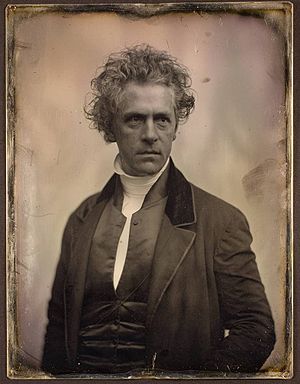
 Reverand Rollin Heber Neale, 1850
That is one nasty preacherman.
William Sydney Mount, 1853
A dastardly lout, a cad, a rogue. Tell me more.
Julius Caesar
Proving that "sexy is ageless" even at 2000+. Vici indeed.
Walter Sickert, about 1918
Walter Sickert is bad news in the best possible way.
Commander in armor, Anthony van Dyck, c. 1625
Long lush hair, beautiful features, armor. Taking command.
Vsevolod Garshin, Ilya Repin, 1884
Ok he seems like a mess but you know you'd want to help him edit his work, get him some new clothes and cook for him.
Adrien Brody would play him in the movie.
Theodore Gericault, Horace Vernet, 1822-23
He painted severed limbs, ship wrecks and the insane and he had tuberculosis. Quite a handful. Then again he looked like this.

Three Men and a Boy, le Nain brothers, 1647-8
Dark, sketchy, satiny long-haired fellows—lets have a beer and discuss.

Young Man at Prayer, Hans Memling, 1487
This young man and Michael Sweerts, below, are vying for Most Sensitive guy
self portrait?, Michael Sweerts, 1656

Portrait of a man against flames, Isaac Oliver, about 1600
The flames, the shirt down to there, the jewelry, this guy is almost too showy for his own good.
Were women throwing their farthingales and drawers at him?
first cousins, the future Tsar Nicholas and King George V
Sporting fellows if ever there were! double date!
Albert of Belgium, about 1917
Impeccably turned out for trench warfare; he can carry me to safety anytime.
Anton Chekhov, 1890s
Weasely, but then again...
a tailor, Giovanni Battista Moroni, 1565-70
Turbulence beneath the calm, no mere shopkeeper, he.
The heart of an artist strains beneath that finicky, micro-slashed doublet.

I see Jeremy Irons in the movie.

William Hogarth, Louis-François Roubiliac, c 1740
Hogarth is more of a runner-up but I do love this bust. 
He's got a laddish humor and pugilistic intensity that wouldnt be out of place in a Guy Ritchie film.
I'd been collecting them on and off, images of men that seem incredibly appealing to me despite the century or two (or several) that might separate us. It started with that photo of Chekhov. Something about the greatcoat and the reed slim cane and that cocky, short man sensibility...  You may remember the electrifying Reverend Neale and the darkly dangerous Mr. William Sydney Mount from my Sartorialist, 1850s Edition post.


This is merely a trifling survey and part of on-going research... A good Regency-era Romantic is a must and I am certainly forgetting some entrancing 18th century fellow so please do let me know who should be on this list. [A Gentlemen's Edition will surely follow in the near future, with a selection of feminine pulchritude of the ages.]

* [with apologies to People Magazine]
Where is William Powell you might ask? Or Kurt Cobain? or any number of too-recent, too-recognized, or too-well-publicized men who could surely otherwise be on a list of Sexiest Dead Men? Well, this is an inexact science so let me know what you think.


PS: Someone asked why I skipped Lord Byron. I have to report that his reputation always seemed more attractive to me than he did.

Friday, November 19, 2010

permanence and (im)perfection

From top: 15th century bowl with 18th century porcelain yobitsugi repair, mid-17th century stoneware cup with kintsugi, 19th century tea tea bowl with kintsugi, mid 15th century bowl with maki-e repair.
All from the Freer Gallery of Art, Smithsonian Institution
12th century Korean ewer with replaced spout. V&A museum


All images of western repaired objects below from Past Imperfect, a blog by Andrew Baseman


My favorite items from Past Imperfect are unequivocally the glassware with prosthetic bases

First: kintsugi, I'm rather taken with the concept. Kintsugi ("gold joinery") is a traditional Japanese method of repair for cracked and broken ceramic ware. Lacquer is used to reattach broken pieces, the resulting "veins" of adhesive are then coated with silver or gold powder. Yobitsugi and maki-e are related techniques, the first utilizing "alien" pieces of ceramic to fill in for missing fragments, the latter replaces loss with areas of solid, decorated lacquer.

From a beautiful almost overwhelmingly sensitive essay by Christy Bartlett in Flickwerk:The Aesthetics of Mended Japanese Ceramics interpreting the exquisitely subtle aspects of Japanese aesthetic philosophy:
Not only is there no attempt to hide the damage, but the repair is literally illuminated... a kind of physical expression of the spirit of mushin....Mushin is often literally translated as “no mind,” but carries connotations of fully existing within the moment, of non-attachment, of equanimity amid changing conditions. ...The vicissitudes of existence over time, to which all humans are susceptible, could not be clearer than in the breaks, the knocks, and the shattering to which ceramic ware too is subject. This poignancy or aesthetic of existence has been known in Japan as mono no aware, a compassionate sensitivity, or perhaps identification with, [things] outside oneself.
Quite a while ago I wrote briefly on the related Japanese sensibilities of wabi and sabi. The terms wabi-sabi taken together identify and connote appreciation of qualities such as impermanence, humility, asymmetry, and imperfection. (These underlying principles are diametrically opposed to their Western counterparts: values based in Classicism, perfection, rationality and the heroic.) I was dumbstruck when I first learned of these concepts. This dialectic or opposition appeared to explain one of my longstanding issues: a certain loneliness I'd felt growing up, in part because most everything I found aesthetically interesting, pleasing, or desirable seemed to be the farthest thing from what was all around me. (This was Queens in the 1970s and 80s. I carried with me a sense mild alienation most of the time.)

I have to clarify that it is the idea of kintsugi— mending as transformation, a sort of reified transience— rather than the physical ceramic objects themselves that truly seems beautiful to me.//

From the philosophically suffused, rarefied aesthetics of kintsugi to the stalwart thrift and ingenuity of necessity: Interior designer Andrew Baseman's blog, Past Imperfect, the art of inventive repair is a great find for anyone interested in the beauty of mended objects. Andrew's blog focusses on his collection of artfully repaired items, mostly 18th and 19th century western artifacts. Professing a longstanding appreciation of "make-dos"— folksy or crude homemade repairs— Baseman prefers the term “inventive repairs” for describing and appreciating the embellishments on the pieces. His collection is a parade of charming, quirky, even mystifying, everyday items from the past made even more so by the eclectic methods employed in mending physical mishaps. These objects lie somewhere outside but near the boundaries of "folk art." They seem to be animated with a spirit that pristine examples don't necessarily hold, a paradoxical demonstration of perseverance and resilience.

Monday, November 15, 2010

ancient face book

archaic statue fragment, possibly Apollo, 6th c BC
I dont quite understand the tremendous aesthetic shift in Greek art: This and the many stylistically related kouroi are all completely unlike anything envisioned with the (later) Classical eye
mummy of a cat from Abydos, Egypt, c. 1st c AD, British Museum.
A shipment of as many as 180,000 mummified cats was brought to Britain at the end of the nineteenth century to be processed into fertilizer...

Ptolemaic noblewoman, said to be Cleopatra or one of her court, 50-40 BC, British Museum

Bronze portrait of Sophocles, 5th century BC, British Museum

Bust of Julius Ceasar in green schist, Berlin
What an insane choice of material

limestone and stucco portrait of Nefertiti, 1345 BC, Berlin
Serene and unsettling at the same time

"Egyptian princess", Louvre

sycamore wood statue of Kaaper, chief lector priest, 2465-2458 BC, Cairo
He looks like a hit man

marble portrait of Lucius Verus, ca. 166–170, co-emperor with Marcus Aurelius,
Metropolitan Museum of Art
He was said to have blond hair that glinted in the sun, as if sprinkled with gold dust

bronze bust of Lucius Junius Brutus founder of the Roman Republic, c 3rd or 4th c BC,
possibly by an Etruscan artisan, Capitoline Museums
It is an odd mix of primitive and virtuosity

a Roman, unknown, Capitoline Museums
I think this is one of the most captivating portraits of any age. He and Kaaper (above) could be in The Godfather.
Bronze portrait from Delos, c 80BC
He seems to project Romantic weltschmerz 1800 years early
a wood and gesso portrait of King Tutanhkamen emerging from a lotus, ca. 1354 BC
Notice the folds of skin on the neck

a wooden Ka statue of pharoah Hor, c 1757 BC, Cairo
It is so much more animated, jovial, than most royal portraiture— if idealized funerary statuary can be jovial

A selection of compelling portraits I gathered along the way.