Showing posts with label sound/music. Show all posts

Saturday, April 10, 2010

That Gummy Epileptic! What a coffee-mill!

Emilie Marie Bouchaud was born May 14, 1874, in Algiers (though "of pure French stock" she was quick to add). Arriving in Paris about 1890, she styled herself Polaire and became a cabaret and stage sensation. Noted for her skittish energy and frenetic performances, she was given the nickname "la gommeuse épileptique." Google Translate renders it rather comically as "the gummy epileptic." (I'll assume we're losing a lot in English*...descriptive idioms turned hilarious crazy-talk in literal translation.) We read by way of explanation:
the gummy epileptic, she throws her head back, moving from one foot to another with clenched fists in song recitals with mocking words ... By her own admission, her feet are dancing alone in her shoes!
A petite 5 foot 3, she was celebrated for her tightly corseted wasp waist—ostensibly fourteen inches (although many promotional images seem to be retouched to alarming extremes). Decadent poet, novelist and dandy Jean Lorain evokes her mesmerizing performance as equal parts Orientalist seductress and fearsome whirling Dervish:
Polaire! The agitating and agitated Polaire! The tiny slip of a woman that you know, with the waist slender to the point of pain, of screaming out loud, of breaking in two...the phosphorus, the sulphur, the red pepper of that ghoulish, Salome-like face, the agitating and agitated Polaire!
What a devilish mimic, what a coffee-mill and what a belly-dancer! Yellow skirt tucked high, gloved in open-work stockings, Polaire skips, flutters, wriggles, arches from the hips, the back, the belly, mimes every kind of shock, twists, coils, rears, twirls... trembling like a stuck wasp, miaows, faints to what music and what words! The house, frozen with stupor, forgets to applaud.
What was performed on the stage in Paris of 1900 evidently took some time to get to America. Ten years later, after bubbling up from brothels and low dance halls, the "young set" of this country went "dance mad." (See an earlier post about the Grizzly Bear, Bunny Hug and the Turkey Trot)
Sheet music, drawing by C. Lavigne, 1900
M. DuFleuve, listed top right, is her brother
Picture from Polaire 1900
I'd love to get the back-story of this "Zippy the Pinhead" look. The intentionally grotesque character is fascinating for such a beautiful performer. Picture from Polaire 1900
My favorite image (above)— so vibrant, so kooky
Picture from Polaire 1900
postcard by Nadar, 1900
(the retouched photographer's stand, to help the subject keep still for the exposure, can still plainly be seen behind her legs) Picture from Polaire 1900
"the Female Torpedo" by Charles Leandre Picture from Polaire 1900
poster by Toulouse Lautrec, 1895. This seems to be her "gummy epileptic" dance!

Picture from Polaire 1900
Polaire was touted as having a 14-inch waist, though many of her publicity images (including this one) are noticeably retouched
As with a good many French performers, Polaire did not age well. She died in 1939.
Image above of Polaire (only) from Polaire 1900
Why is it that so many French women of a certain age seemed to shrivel into little hobgoblins? In later life, each appeared to have been issued a perennially dyspeptic expression, a slash of drawn-on brow, and an aureole of frazzled cotton-candy hair (often an unnatural shade of orange --see Jean-Claude Christo, and Sonia Rykiel).

* Michael Leddy tells me gommeuse may be "fop"—any French readers out there with additional information?

Images of Polaire are drawn from these very comprehensive French sites.

Friday, December 26, 2008

trading halos for high jinks

above, a scene from Caught in a Cabaret with Charlie Chaplin, 1914
left, "The Return from Toil," working girls as sketched by John Sloan; right, Variété (English Couple Dancing), 1912/13, Ernst Ludwig Kirchner
Special to The New York Times.Thursday, February 6, 1913
Mrs. Taft being the President's wife...

A week ago or so at a client meeting I found a book in the "free" pile–
Cheap Amusements: Working Women and Leisure in Turn-of-the-Century New York by Kathy Peiss. Published in the 1980s, the book has a very academic and earnest "Women's History" approach which would be enough to turn me off normally, but I particularly got caught up in the chapters on dancing and "Putting on Style."

The first decades of the 20th century brought legions of girls and young women–garment workers, salesgirls, artificial flower makers, tobacco workers– into the work force. Some of these women even lived on their own– a very new phenomenon. The book focuses mostly on working class women who were intrigued by the novel concept of "leisure time", influenced by feminist intimations of the "New Woman" and enticed by a range of modern consumer options.

Most people think of the 1920s as erupting into dance, champagne and louche-ness in a fireworks display of Modernity when in fact, the years leading up to the First World War were rather "fast" and raucous in their own right. Much of the behavior the "Jazz Age" gets credit for had its beginnings before the War.

New York was "dance mad." Social clubs and amusement societies held rackets or blow outs at one of the many dance palaces that would hold up to 3000 patrons. "Rough girls" smoked and teased their hair into high pompadours, augmented with puffs and rats. They wore red high heels and exaggerated straw hats drooping under the weight of stuffed birds, and sprays of artificial flowers. They flocked to dance halls, hotels, restaurants for dancing teas and a chance to learn the One-step, the Gaby Glide, the Hesitation Waltz, the Maxixe, Tango, and the Shimmy.

Some of the dances became huge controversial fads and were banned from respectable establishments. The Grizzly Bear, Bunny Hug and the Turkey Trot in particular were said to have originated about 1906 in the brothels of San Francisco's Barbary Coast and were judged vulgar, bordering on obscene. The very worst of the dances invited "much twirling and twisting and easy familiarity...in nearly all the men in the way they handle the girls," according to an observer. "Once learned the participants can at will instantly decrease or increase the obscenity of the movements."

Many venues instituted patrols to maintain decorum and public declarations were made against the new dances. The New York Times of January 16, 1912 reported an announcement at the Hotel Astor "Should there be any of you who have the inclination to dance the grizzly bear, the turkey trot or an exaggerated form of the Boston dip the members of the Floor Committee will stop you."

Investigators sent to prowl the dance halls by the Committee of Fourteen (whose focus was the suppression of commercialized vice) found patrons "smoking cigarettes, hugging and kissing and running around the room like a mob of lunatics." The girls, they found, were "game and lively and sought out flirtation. They go out for a good time and go the 'Limit'".

* * *
"It was the hesitation drag...and never before has there been such a gliding sliding hesitancy; never before such a dreamy drag; never before such a culminating triumph as the whirl, a la pivot. It was supreme; it was new... It was a dance that renounced halos for high jinks, disapproval for complete surrender."
Djuna Barnes– Brooklyn Daily Eagle, September 5, 1913


* * *
What I enjoy most in reading history is when the accrual of a few small casual details suddenly makes the subject recognizable. In an instant a description of "history" becomes knowable, the facts lift from the page. Despite the fact that we see the 1910s in black and white and consider it part of history, it no more felt like or unfolded like "history" than right now feels to us. History is not a place– it is not bound by "the past"– it's simply a stream of everydays.

Thursday, February 21, 2008

cringe-worthy

I'm surprised I hadn't thought about this before: word aversion (also called "the moist panties phenomenon.") My friend Clay brought it to my attention that a fair number of women, in particular, express disgust at the sound of the word "moist." This was the first I'd heard of it. And it was not until I focussed on it did I begin to find something unpleasant about the word. I hadn't really had an aversion to "moist", but if pressed I'd say there was something icky about the oleaginous "oy" coupled with the prissiness of "st."

Language Log stresses these are not words that are taboo, or commonly taken to be offensive, nor are they words subjected to widespread misuse, which triggers a somewhat-related "word rage." Rather, this is purely subjective opinion based on sound, divorced from definition.

I like the idea of word aversion. I mean, I'd already made lists of words and names I liked, independent of meaning. Why not words I am repelled by? Off the top of my head, words that make me wince are "veggies" and "yummy."
I also hate "tummy." I notice these are all "ee"-sounding, informal words. Dare I say Americanisms? Perhaps not. I wonder, though, if it's more the connotations that these words bring with them-- annoying, entitled parents I come across in my neighborhood, say--than the words themselves. I am disappointed by the word periphery. It's got a sexy definition that I like, but the sound of it doesn't evoke anything remotely appealing. It is unsatisfying to say and it is ever-so-slightly inelegant– the "p" - "ph" and "eri" - "ery" seem reduplicative but they're not. The "phery" in particular seems weak and awkward-looking.

Language Log makes this interesting connection, quoting another blogger:

I really just don't like those words. I don't dislike their meanings, but phonetically they conjure up all sort of unpleasant textures. 'Baffle' sounds fibrous and tough like a mat of hair, and 'Cornucopia' is too much like 'corpulent'. I won't get started on 'squab'.

This reminds me somewhat of the way that people talk about synesthesia -- I wonder whether there's any connection.

For some of us I think there is definitely a connection. I agree with the above about "baffle" although I dont' find that word bothersome. When I read "lobe" I think of wet, blubbery, custardy things. I would not say I'm a synesthete but I often have textural or other visual connotations with sounds. I would, for instance, opine that "two" could never be blue-- its more of a warm-colored number. I have never experienced taste or smell in relation to a word....

I queried some of my friends about disliking words. I'll update as the answers roll in.
Matt says:
veggie for sure
cheeses
soups
for some reason these plurals bother me

Steve:
I won't use "munchie" either. I don't use "scarf" either but i accept scarf.

Doug:
Oh I hate veggie!
..."dangle" would be one...

Maria:
i'm not crazy about brassiere, crayfish, minge

my mother:
guru "I even hate the way it looks" said she

Anne
horny!

Update: I recently got an email from a potential date that used the word "tummy" prominently and it nearly made me physically ill.
I still get a shiver of disgust just thinking about it. (don't worry its not someone who would know that I'm referring to him).
The word "goodies" also gives me pause.

In reading the comments I like that Brooklyn Brit is throwing flaps into the mix...

Wednesday, October 25, 2006

can you hear me now?

Or, a disquisition on the "cultivated American" accent
I was barely reading an article in the Wall Street Journal about cell phone problems when, in a section about sound quality, I came across the intriguing term “Harvard sentences.” Evidently cellular systems engineers actually travel around the country testing signal quality-- somewhat like the familiar Verizon "can you hear me now" guy-- by sending out aural snippets known as Harvard sentences:
a collection of phonetically balanced sentences that measure a large range of different qualities in the human voice. These were originally published in 1969 as the Institute of Electrical and Electronics Engineers recommended practice for speech quality measurements.
The sentences go a little something like this (in random selection):
"She has a smart way of wearing clothing. These days a leg of chicken is a rare dish. Cars and buses stalled in snow drifts. Both lost their lives in the raging storm. The pencils have all been used. The stale smell of old beer lingers. The beetle droned in the hot June sun. A gold ring will please most any girl. When the frost has come it is time for turkey..."
Sort of open-mic beatnik free verse, no? Then I got the mental image of someone in a florescent-lit cubicle reciting all 200 sentences with overly precise diction into a large reel to reel tape recorder. No indication as to how they were named but I would guess Harvard is the stand-in for the concept of a precise ideal.
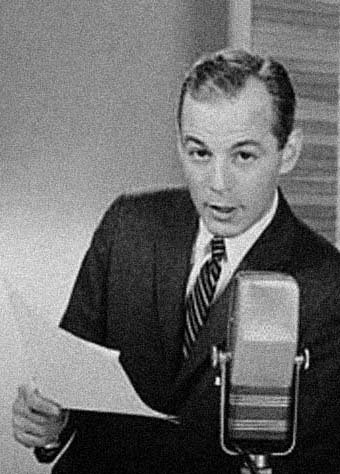
So I started thinking about pronunciation and the classic tone and phrasing found in movies and newsreels of the 1930s and 40s. Listen to
Katherine Hepburn, William Powell, Cary Grant, and notably, FDR whose "fear" was rendered as "fe-ah." Without having really focused on it I'd wondered where that manner came from, and more importantly, where did it go? Along with its socio-economic and narrative opposite, the Toity-toid an' Toid /James Cagney New York Gangsterese, hearing that mode of speech creates as much a sense of temporal distance ("I don't relate to this as part of my continuum, I'm listening and watching something from the past") as the b/w of old footage or the style of period clothes. Perhaps New England regionalism was a part of the equation and, yes, Cary Grant was British but that was just a technicality. Little Edie Beale in Grey Gardens is probably the last time I've heard a version of this pronunciation "in public." Even more exaggerated were the stentorian, "Voice of God" intonations from newsreels like the March of Time...
---
This just in: I've found that what I've been talking about here is called "Mid-Atlantic English" according to wikipedia:
a style of speech formerly cultivated by actors for use in theatre, and by news announcers...institutions cultivated a norm influenced by the Received Pronunciation of southern England as an international norm of English pronunciation. According to William Labov, the teaching of this pronunciation declined sharply after the end of World War II.
---
Amazing sound resource here
• Hear an interview with a 101 year-old former slave
• A civil war soldier remembers his experience on the morning Abraham Lincoln died.
•
Mae Timpano remembers living under Coney Island's tallest roller coaster.
and more...
and also at the Library of Congress