Friday, November 3, 2006

Favorite Thing

I love diners. They are one of the truly great things in this country. For all my anglophilia, British caffs don't even come close. They are, to be fair, fascinating in their own right but exist in a wholly different realm-- one that conjures pre-'Cool Britannia' insular Britain, resignation and strange notions of comfort food borne of privation (see: beans on toast). Perhaps I'd put them in the same continuum as the urban coffee shop but way at the other end. Very generally speaking American diners are about abundance.

People fetishize the iconic chrome diner (one of my sentimental favorites: the Cutchogue) unfortunately to the exclusion of the many other incarnations and details of diners of all stripes. The comically grandiose Outer Borough
variety (I come at this from an acutely NYC-centric perspective) in stucco and smoked mirror, are usually free-standing buildings, and are remodeled and updated periodically. You will find (9.5 times out of 10) Greek souvenir kitsch, a lively atmosphere, voluminous menus, a motorized rotating dessert display, and if you're very lucky, paper placemats of cocktail recipes that include things like Sprite. In the city, there is the corner coffee shop. It is increasingly rare to find one that retains a Hopperesque urban melancholy but I still try, having many a tuna melt around town in the process. (Andrew's Coffee Shop, Madison and 33rd, is not very Hopperesque, but it does make the best tuna melt I've encountered yet, above, the secret being the grilled toast.) Another Andrew's that closed a year or two ago on Fifth Avenue near 20th Street, was a bit closer to capturing that sensibility though not literally. Bright and beige and open-planned in a quietly 1960s way, it had an extended horseshoe counter and stools where a regular scattering of patrons was always alone together. Waitresses offered newspapers from behind the counter to those who felt stranded, not knowing what to do with themselves, or where to look, while they ate.

A word about terminology:
luncheonette, which I find to be more a written, rather than spoken, word, is a small diner: a counter with stools and maybe one row of tables or booths. Eisenberg's sandwich shop, an interesting and enigmatic hold out on Fifth Avenue, is a luncheonette. The evocatively shabby Grand Luncheonette, left, wedged under a decaying theater marquee on 42nd Street, was in fact one of the last of the dying breed of lunch counter, consisting of only the open kitchen and serving counter with stools. (Photo c. 1997 by Robert Wright.) There used to be a large Woolworth's on east 14th street that closed about the same time as the Grand and it had an iconic double-horseshoe lunch counter complete with pies on stands under glass domes. Sort of like a real-life Wayne Thiebaud.

I imagine New York City of the 1950s filled with lunch counters.


One of the best incarnations of all however is the random road side find--chrome or otherwise-- preferably with some mysteriously named local specialty...

Wednesday, October 25, 2006

can you hear me now?

Or, a disquisition on the "cultivated American" accent
I was barely reading an article in the Wall Street Journal about cell phone problems when, in a section about sound quality, I came across the intriguing term “Harvard sentences.” Evidently cellular systems engineers actually travel around the country testing signal quality-- somewhat like the familiar Verizon "can you hear me now" guy-- by sending out aural snippets known as Harvard sentences:
a collection of phonetically balanced sentences that measure a large range of different qualities in the human voice. These were originally published in 1969 as the Institute of Electrical and Electronics Engineers recommended practice for speech quality measurements.
The sentences go a little something like this (in random selection):
"She has a smart way of wearing clothing. These days a leg of chicken is a rare dish. Cars and buses stalled in snow drifts. Both lost their lives in the raging storm. The pencils have all been used. The stale smell of old beer lingers. The beetle droned in the hot June sun. A gold ring will please most any girl. When the frost has come it is time for turkey..."
Sort of open-mic beatnik free verse, no? Then I got the mental image of someone in a florescent-lit cubicle reciting all 200 sentences with overly precise diction into a large reel to reel tape recorder. No indication as to how they were named but I would guess Harvard is the stand-in for the concept of a precise ideal.
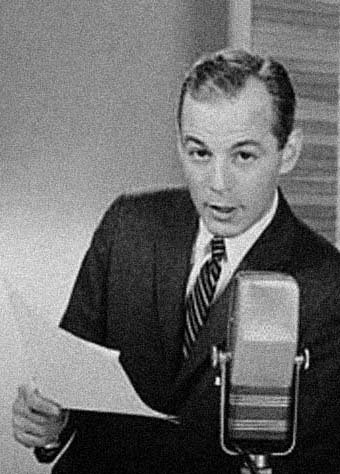
So I started thinking about pronunciation and the classic tone and phrasing found in movies and newsreels of the 1930s and 40s. Listen to
Katherine Hepburn, William Powell, Cary Grant, and notably, FDR whose "fear" was rendered as "fe-ah." Without having really focused on it I'd wondered where that manner came from, and more importantly, where did it go? Along with its socio-economic and narrative opposite, the Toity-toid an' Toid /James Cagney New York Gangsterese, hearing that mode of speech creates as much a sense of temporal distance ("I don't relate to this as part of my continuum, I'm listening and watching something from the past") as the b/w of old footage or the style of period clothes. Perhaps New England regionalism was a part of the equation and, yes, Cary Grant was British but that was just a technicality. Little Edie Beale in Grey Gardens is probably the last time I've heard a version of this pronunciation "in public." Even more exaggerated were the stentorian, "Voice of God" intonations from newsreels like the March of Time...
---
This just in: I've found that what I've been talking about here is called "Mid-Atlantic English" according to wikipedia:
a style of speech formerly cultivated by actors for use in theatre, and by news announcers...institutions cultivated a norm influenced by the Received Pronunciation of southern England as an international norm of English pronunciation. According to William Labov, the teaching of this pronunciation declined sharply after the end of World War II.
---
Amazing sound resource here
• Hear an interview with a 101 year-old former slave
• A civil war soldier remembers his experience on the morning Abraham Lincoln died.
•
Mae Timpano remembers living under Coney Island's tallest roller coaster.
and more...
and also at the Library of Congress

Thursday, October 5, 2006

minor casualties of the 21st century

My friend Doug and I are making some letterpress notecards (who isn't these days?) and we're looking for something to print and line the envelopes with. Onion skin I thought. Kind of like the old air mail paper. Its mottled translucence, theoretically, could be interesting and it has that crinkley, unusual sound. Nice. So I started calling some stationery shops and got some chuckles on the other end of the line. One nice man mused, surely with some hyperbole, "we sold that about 40 years ago." Another said, with amusement, " you have to talk to Abe, he remembers that," and put me on hold. Alas, when Abe, evidently too busy to be troubled with memories of antiquated stock, picked up he simply said, "No, we don't got that." Todd Bielen over at Papertec Inc, which specializes in, well, "specialty papers," was very helpful. They had onion skin that, according to their site, "was approved for use by the US government and meets military spec P-157A... used in the production of military flares, munitions, and detonators." Unfortunately it was the cockle finish I was looking for and there was none left. Not only that, the "only mill in North America" that made onion skin had just ceased production. "So whatever's out there now," said Mr. Bielen with sympathy,"that's it."

I thought of something I'd read somewhere about a group of sound engineers in the 1970s who went around with microphones and reel-to-reels recording everyday sounds that were "endangered" like hand cranks and, presciently, telephone rings...


Doug and I have several options (we can try eBay, we can try Bible paper, we can go another route entirely) but I find it strangely sad.

Addendum: I've gotten an (relatively) outrageous amount of traffic from onion skin queryists. Now, in the comments for this post, The Paper Mill Store reports they have onion skin-- although I do not see any of the much-celebrated cockle finish...

Sunday, August 27, 2006

aesthetic laundry: notes


The photo on the left is from the June 06 Martha Stewart Living, on the right is the Baldizzi kitchen as recreated to c.1935 in the Lower East Side Tenement Museum.

The Museum is an imaginarium of immigrant struggle and veers, unfortunately, into quaint nostalgia. Its cleaned-up, prettified tableaux are irritatingly appealing to me. "People suffered social and economic privations in these stifling hell holes," I have to remind myself... and yet...that linoleum is... really cute.

The Martha aesthetic rarefies the commonplace and defamiliarizes it
. It takes the everyday and makes it exclusive.

Friday, August 25, 2006

“vexatious” peaches and the nostalgic voice

On a tip from a friend, I turned to the Wednesday New York Times greenmarkets column, Bringing it Home, entitled "Ode to a Peach." As my eyes fell on the first sentence, “Peaches vex me,” I knew I was going to settle in on some entertaining reading. The piece, a perfectly lovely little meditation on flavor, home made desserts, domesticity and fetishistic description, had a tone that was immediately recognizable, but a difficult one to define exactly. The author CB, an acquaintance from long ago, is a former long-haul Martha Stewart Living editor and the voice she employs, what I call High Martha, is lyrical, allusive, nostalgic. For me, the writing style in general is gag-inducing but intriguing; I'm simultaneously drawn to it and repelled. It parlays the now-familiar commercial "romanticism" of Ralph Lauren (or even, at another price point, JCrew) that makes one yearn for weathered cedar shakes, heirloom candlesticks with evergreen bobeches and a compound on the Vineyard. I am forced, over and over, to "remember" the succulence of fresh-picked berries and pumpkin carving parties that, oh yeah, I never experienced growing up. This nostalgia for what one has never experienced is the most insidious --and fascinating--aspect. A longing for false memories. It is this tension of being both drawn in and repelled, comforted and disappointed, that leaves me with a faint malaise. It is this nostalgia that almost brings the term's medical origins back to the surface.
In CB's column, the tone has less of the prescriptive aloofness that is part of classic Martha, more "just us girls" :
But the best thing I’ve ever done with a peach isn’t something I’d serve to company, or even to my family. It falls into a category of things I think of as single-girl food, since it reminds me of the quirky indulgences that brightened my days before my husband came into my life....Purchases in hand, I rode the elevator upstairs and entered the remarkable quiet of our empty apartment. I set everything out on the dining table. First, I spread the fromage blanc on the bread, then sprinkled a bit of damp gray sea salt over it. With a little paring knife, I cut a peach into slim slices and laid them carefully on top. Then I dipped an old baby spoon into the honey and let it drizzle onto the peach slices.

A soft halo of light reflects back from that old baby spoon and envelopes the reader in the warmth of... mounting queasiness? Envy? Befuddlement. From whence this style? And I don't mean CB specifically, I mean all of it. The whole precious lot of it. I am guessing-- and I need more research and input here-- that the poetic, metaphorical tumbles of MFK Fisher and the arm-in arm, raconteurism of EB White have been distilled, or better still, left to ferment in the mouthblown heirloom glass decanter of self-consciousness...
I will be mulling this over further. [photos: polo.com; Gerry Manacsa]

Sunday, August 6, 2006

the olfactory of facts*

(a "postcard" from Robert)

Its August in New York, the pavement is fermenting, there's an abundance of what my friend Robert calls, far too evocatively, "curb chowder," so perhaps its not quite
synchronicity that the New York Times had an article about smells in the Real Estate section yesterday.I've been thinking about odors: good, bad, memories related to. The other day I passed a store that exhaled an odd combination of cat 'spray' and a very specific mustiness-- the kind that, to me, indicates old water pipes, a mossy dankness. Immediately a vision of myself at about 6 or 7 with my parents, visiting an aunt in Lynn, Massachusetts, popped into my head. At that time she lived in a very working class neighborhood, in a New England version of a rear tenement: three or four stories, 19th c., wooden. I remember my mother attempting to make tea and recoiling from the ring around the insides of cooking pots left by boiling water. A discussion ensued on the state of Lynn municipal water supply. All this, in an instant, came back to me on Seventh Avenue in Brooklyn as I passed that store on my way to lunch. I have several olfactory connections that aren't typical, lyrical associations. Oil-based paint, for one. That will always bring back my grandmother. A small-statured but hefty woman in her early 70s, she was, in my memory, always up on step ladders painting her rooms colors I would never choose but seemed right back then, pale pink, yellow, a soft blue. A certain kind of diesel fuel reminds me of Paris. I was on my first trip there with my parents and we stayed in a small hotel-- the Ideal-- that had an astonishingly tiny--lilliputian!-- elevator that put-putted along on fumes of diesel... This elevator could accomodate 1 slim French person with, perhaps, a baguette. Large American baggage was sent up, unaccompanied, piece by piece.

A "trick" I have that seems so saccharine it belongs in Real Simple is to begin wearing a new perfume at the start of a trip. Thereafter, every detail of that trip--breakfasts, museum highlights, clouds, purchases, persons met--will be contained in that bottle.
I haven't smelled the perfume I wore (I think it was my first bottle of perfume) on that Paris trip in years, but I remembered the commercial!

*see Luc Sante The Factory of Facts

Thursday, July 20, 2006

authenticity?

Obvious, perhaps, and reductive, but something seemed to fall into place when I was in Times Square last week:
I suppose I'm one of those people who really annoys other more “pragmatic” people by taking issue with the renewal of Times Square, specifically the main stretch of 42nd Street.
Adam Gopnik in the New Yorker went all Pete Hamill in ‘04, in describing this certain ‘affliction’:
There are, of course, people who miss the old Times Square, its picturesque squalor and violence and misery and exploitation. Those who pointed at the old Times Square as an instance of everything that capitalism can do wrong now point to the new Times Square as an instance of everything that capitalism can do worse. ...they end up being sentimental about anything, shedding tears about muggings and the shards of crack vials glittering like diamonds in the gutter.
Um, no. When I worked at the New York Public Library on Fifth Avenue and 42nd, I would occasionally walk over to TS and was witness to its last long death spiral, from about 1990 to 1995. Its absolutely not that I liked the old Times Square or enjoyed the experience of having to brave drifters, hustlers, and the generally creepy electricity of the place. It didn't seem as though I had the much editorialized nostalgie de la boue. But rather, I think, the layering of signs, styles, architecture, shine, grit, old and new, the fleeting and the hold-out was, at very least, organic. It was built by use, if that makes any sense. What bothers me so much about 42nd street today is the sham "spectacle," the enforced antic gaiety of it all. The subway entrances are especially irksome, and empty, gestures. I'd had trouble reconciling my feelings about the old and the new Times Square and it bothered me that I couldn't quite define my opinion. I think its as simplistic as this: bad “authenticity” trumps bad “renewal.”

[I took this image of one of the 8th avenue subway entrances in around 1994. In relation to this view, behind me and to the left, there was a small arcade with two video games, a photobooth and an ancient “fortune telling” machine that I recall being something like this one. When I last went to that photobooth, it was, like the area around it, just about to give up the ghost. It spit out photo strips for free but because the developing fluid was shot the images were obscured by a disturbing black...miasma. For a moment while posting this I wondered why I didnt take more photos--I dont have any of the arcade. Then I remembered that, in the old TS, with my big honkin' camera around my neck, I was too nervous!]